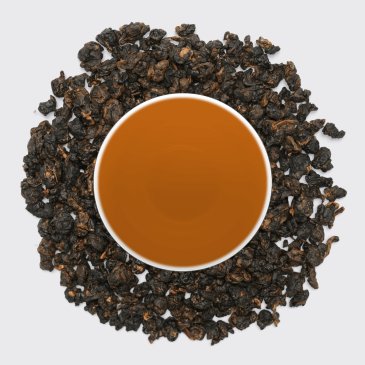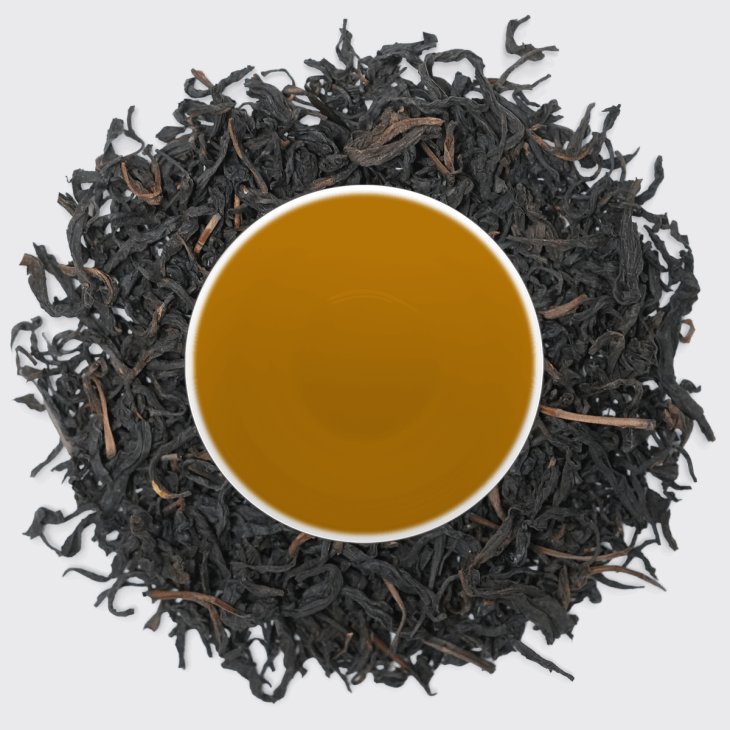



One of my favourite Hunan Heicha's over recent years. Raucous with molasses, sugar, coconut candy and smoky intrigue. Get ready for a wild session!
I have enjoyed this 2018 Wild Tian Jian in my collection many times and I always know that, when this tea is in my gaiwan, I am going to be flying.
Firstly the aromatics - big and powerful that command attantion.
We have muscovado sugar and roasted coconut candy mixed with a touch of treacle and black licorice. This blends into dried prunes and raisin which have been baked over wood fires to add a sweet, resinous smokiness.
Then there is the unmistakable animal appeal of this Wild Tian Jian - an elephant house is in the distance. Far enough not to be intrusive but close enough to make your brain wake up and focus. It is a trick used by master perfumers and it works perfectly in this tea.
In the mouth the tea has all of the sticky, resinous and sweet smoky aromatics but adds a fantastic minerality. There is a fizzing and feisty metallic minerality which rises in the mouth and evaoprates into a juicy, aromatic fog.
Body Sensation is similarly bold - intensely warming with a spinning vortex high which rises from the stomach into the head to leave you a bit gaga (in a good way).
I adore this Tian Jian - it represents my perfect ideal of this tea style (read more below).
Get your hands on it with a 30% discount by completing this Quiz.
ABOUT TIAN JIAN TEA
Hunan has been making Hei Cha (Ripe or Dark tea) for well over 500 years - long before the advent of ripe PuErh just over 50 years ago.
Hunan Hei Cha is famed for being affordable and good quality wth a rich fruit and caramel character. But, we have never selected any for Mei Leaf because I felt that they generally lacked nuance, refinement and that touch of class. They are often made with rougher leaf material and can have a bit too much aggression in the finish.
Anhua Tian Jian tea is considered to be the higher grade of Hei Cha made in Hunan because it uses finer pickings (bud and two leaves) and usually goes through a more careful processing than the rougher tea and Fu Bricks.
The overall process to make Tian Jian tea is to pick, wither and fire the tea (similar to a green tea). Once the enzymes have been mostly deactivated by firing, the leaves are rolled and piled for a couple of days to ferment and transform.
This piling fermentation is much shorter than ripe PuErh (which is usually piled for a month or so), which gives Tian Jian a lighter colour liquor and a bright ernegtic kick (similar to raw PuErh).
After the piling fermentation the leaves are then rolled again and baked dry. This baking process is fundamental to the final tea.
Modern techniques use electric heaters which produce a simpler tea. The traditional method of baking is over pine wood burning seven star stove which imparts a smoky layer to the tea. This smokiness is not as strong as a smoked tea like Lapsang Souchong but adds a wonderfully sweet and resinous complexity to the taste.
After baking, the leaves are then sorted so that the Tian Jian only contains buds and young leaves. They are usually stored for a year or so before being packed into baskets for further ageing.