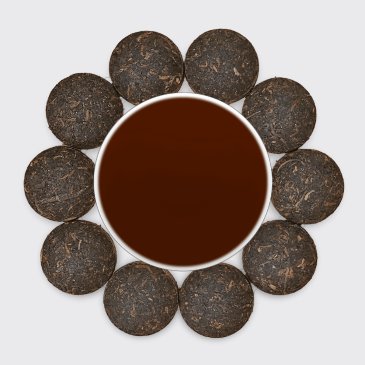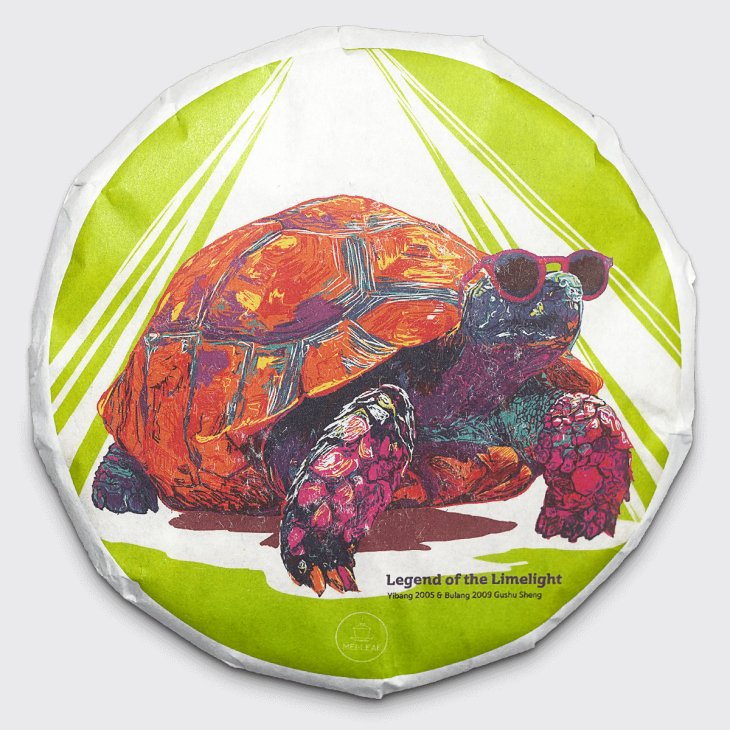



My proudest PuErh creation - a blend of up to 20-year-old aged, ancient tree Sheng from Yibang and Bulang. One dry-stored, one wet-stored to create the most remarkable combination. Spices, fruits, honey, caverns and forests collide in the mouth in a delicious orgy of flavour.
THE IDEA
When a random concept takes hold in my mind, I tend to pursue it, and 9 times out of 10, it doesn't lead to anything. Sometimes, however, it brings me to a place of such exquisite tea satisfaction that it is worth all of the wasted work on discarded ideas.
One such idea started with the question. Do I prefer dry-stored or wet-stored Sheng PuErh?
On the one hand, dry-stored has a smooth and sweet contour in the mouth, highlighting dried fruits, spices and a refined, antique taste.
While wet-stored is raucous and wild with dank caverns, wet forests, nutty warmth and fermented fruity funk.
I love them both and imagined a tea combining both in one cake. The idea stuck and the search began.
This was not an easy task, I had to try to source:
- Two batches of aged ancient tree loose PuErh that had not already been used for cakes and were delicious on their own
- One had to taste clearly dry-stored and the other wet-stored
- They had to work together as a blended tea
So we scoured and searched and tasted many delightful aged teas (its a tough life).
THE 2005 YIBANG
One that I swooned over was a 2005 Yibang tea made from estimated 260 year old trees.
This tea by itself would be a crown jewel in the PuErh world - 20 years old, dry-stored Gushu sheng from one of the six famed ancient villages of Yunnan with its distinctive small-leaf genetics. It was a remarkable find and I am so thankful to the scouts for unlocking this treasure.
The tea was rich in dried fruits, honeys, sweet woodsy spices, antique libraries and a spectactularly cooling hui gan.
But instead of releasing this tea with a fanfare, I sat patiently on this tea and tried to find a wet-stored PuErh.
Now wet-stored, aged, loose Gushu PuErh is NOT easy to source! Most wet-stored PuErh would already have been pressed and then aged in the high-humidity of Hong Kong or Malaysia.
But I held out and kept tasting.
And then a beautiful moment arrived at my sampling table.
THE 2009 BULANG
A pouch arrived from an old scout who I hardly buy from but I know can sometimes pull out a gem. One look and a quick sniff of the dry leaves had me buzzing - the leaves looked dark and the aroma had a deep dank nuttiness. This was wet-stored and old!
My first tasting with the tea was a joyful romp through wet caverns, foraging in wet, autumn forests, inhaling the air of apple cellars and spooning thick nut butters directly from the jar.
The experience was so fermented that I had to double check that I wasn't sipping on a Ripe PuErh! It was so wet-stored!
I then unblinded myself to discover that I was sipping in a 2009 Bulang Gushu made from estimated 220 year old trees. It had been aged in South Yunnan and I can only guess that it had been stored in a wonderfully uncontrolled way to (probably unintentionally) allow all of the wet and heat to do their magical fermentation.
THE EASY DECISION
I will admit that, despite all of the searching, I was tempted to release these two teas as separate cakes. They were both so incredibly delicious characters and it would have made much more financial sense.
But the idea had to be tested and so I combined the little that I had of both samples into one gaiwan.
One sip and the decision was easy-peasy.
The blend was perfection (more on that below).
So, Legend of the Limelight was born and we had our cakes pressed with a 50/50 blend while Celine and I worked on the artwork.
I was a little nervous but mostly confident that this tea would be a winner.
There is always an element of the unknown when steaming aged leaves to press them into cakes. The extra moisture and heat kickstarts more transformation and I was worried that it may blur the disticntions between the dry and wet-stored taste of the two teas.
So when the cakes arrived I left them for a while to allow the teas to just settle into their relationship.
LEGEND OF THE LIMELIGHT
My inaugural of Legend of the Limelight was one of the greatest tea sessions of my life.
This tea has it all.
The Yibang brings the dried fruits - cherries, pineapple, plums and apple all concentrated and sticky. Add lashings of ambrosial forest flowers transformed into rich, dark honey, dominant sweet spices of fragrant incense and the luxuriant age of varnished antique woods, cigar boxes and leather.
The wet-stored Bulang then adds a whole other dimension which merges perfectly into the mix.
Camphor and mint add a medicinal edge to the taste. Clay, chantarelle mushrooms and wet caverns brings you into the depths of a forest in autumn. The dank humidity transforms the fruits into mulled ciders and fruit liqueurs.
There is also a chewy nuttiness of betel, peanuts and almond which merge with the honeys to add a sweet brittle finish which transfoms to mint caramel aftertaste.
Body sensation is rising and floaring with a feeling of entering the rarified mists of high mountains - it clears and settles but is high and transcendent in euql measure.
A TINGE OF SADNESS
This tea is my version of aged PuErh perfection. I am floored by its flawlessness and its complete expression of character from the first infusion.
I feel incredibly happy that Legend of the Limelight has found its way into the world and will treasure it for decades.
And yet I feel slightly unsettled every time I sip it - not because it isn't everything that I have gushed about above but because I wonder if I will ever taste another tea like it again - and I am finding it hard to accept that despite all my tea training in impermanence.
It is highly improbable that I will be able to source a similar combination of 20 year old, ancient tree, immaculate PuErh stored in radically different conditions. Instead I may have to find some younger material and commission the ageing myself so that I can enjoy it in my seventies!
I also feel, strangely, that the completeness of this tea mirrors a completion of sorts in my tea journey of experimentation. I don't mean to be dramatic but there is a sense that I will not better this creation. Time will tell I guess.
SAVOUR THE LEGEND
So as I sit and write this LONG product description with my fifth infusion of Legend of the Limelight, I can only try to savour every sip with reverence - the greatest lesson in tea.
We only have 500 cakes available and I would honestly be quite happy if they never sold and I could store these away as an heirloom to taste them as they age into antiques.
The price is silly too - representing the basic margin for these loose teas and nowhere near the preciousness of the whole.
I am genuinely finding it hard to publish this page and let this tea sell but here we are: deep breath and let it go.
Legend of the Limelight - a love letter to all teaheads out there.