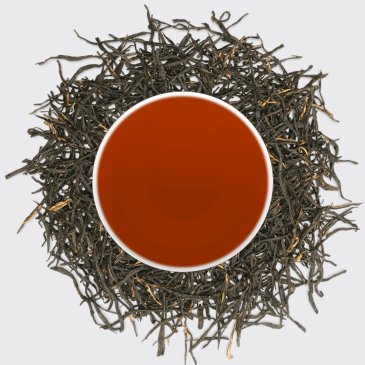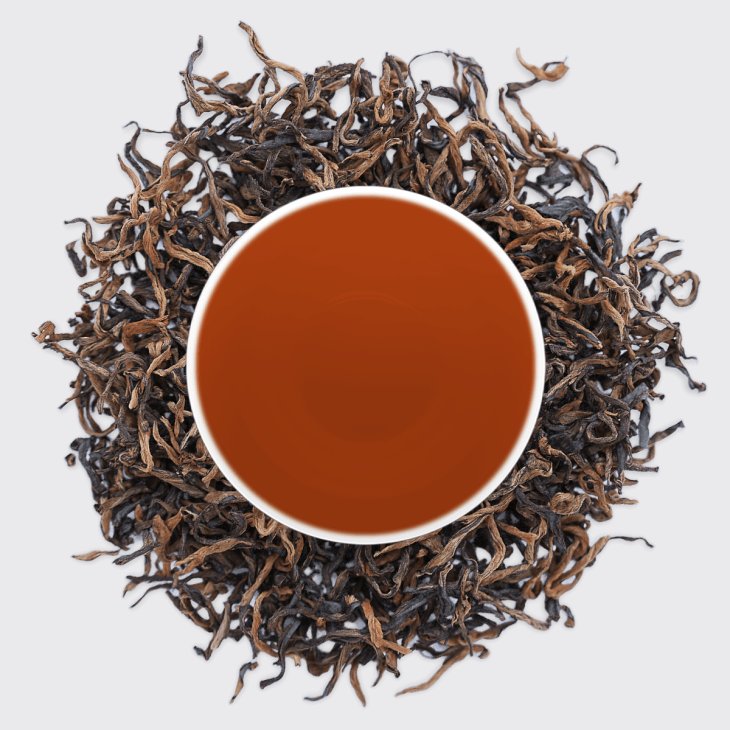



Zesty and incense-spiced rendition of a Yunnan Dianhong made from 100 year-old trees. Fizzy peach candy, antique pine and watermelon frost.
Yunnan Dianhong is probably China's most famous Black tea. Renowned for its beautiful golden buds and light and malty liquor.
But, of course, there are many styles of Dianhong.
The most common are those small, spiralled golden buds that produce a warm, malty tea, but are usually underwhelming.
Then you have the more intense varieties like Wildwood Gold, which offer chocolate, nut and flowery highlights. Or our Honeycomb Black with honey, cocoa and oat biscuits. There is also our Sultan's Quill which is heady with hot fruit and spice markets with overipe mango and saffron.
So I was not particularly on the lookout for another Dianhong but I always taste samples sent by our scouts, and I stumbled on this Temple Frost Black.
This tea is from 100-year-old trees growing around Fengqing - an area which specialises in Black tea (of varying quality).
On the nose there is the dark chocolate and biscuity warmth that we associate with a good Assamica Yunnan Black.
The fascinating character (which made me buy this batch) was this fizzy, effervescent quality to the aroma and taste.
Imagine those Vitamin C fizzy selzers or sherbet. Bright, playful and so unusual for a Dianhong.
Peach candy or puree is also there to add some sweet fruits to the fizz.
Interestingly, these notes are all given structure with aromatic temple woods, incense and mossy forests.
There is also a unique herbal note of watermelon frost lozenges. This is a herbal sweet that I was always given as a kid when I had a sore throat or cough. It is made by blending ripe watermelon with mineral salts in rinds or clay and leaving it to ferment. The outside of the rind or clay starts to develop a white frost which is collected and tastes sweet, herbal and mineral.
Temple Frost Black combines the warmth of Dianhong with these fresh, zingy, foresty and herbal notes which all end in a cooling finish.
These tea trees must have had some unusual experiences in the last 100 years and you can taste it in the cup
A perfect example of how micro-terroir can be expressed in tea.