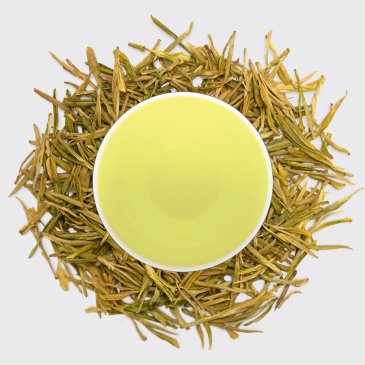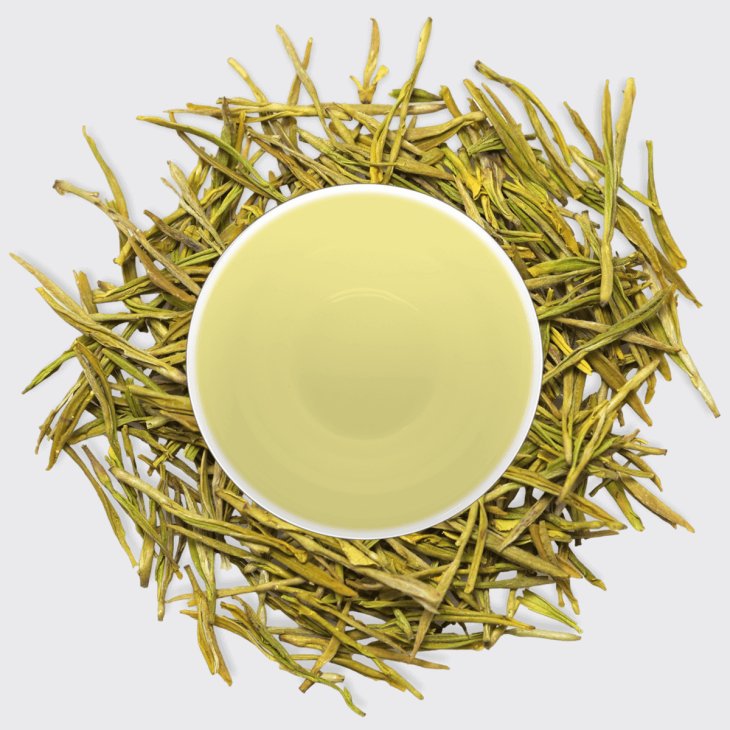



Our 2025 batch of Anji Bai Cha is here and it is another winner. Golden-hued leaves bustling with deep and toasty richness to add sweetness to the pale, sweet, lightness of a great Anji tea.
I love Anji Bai Cha which is richer and warmer. Some people may look at these leaves and think that they are more golden in colour than the average Anji tea. They would be right because I don't like the greener stuff - sure it has that edamame starchiness and milky lightness but they also taste too raw and unfinished for my preferences.
Instead, I like to source proper albino leaves (read below to learn more) which have then been produced with a bit more emphasis on flavour development through withering and heating. This brings out a sublimely sweet nougat nuttiness to the experience and richer mouthfeel.
If you would like to try an Anji Bai Cha which is milkier with a rich elegance then also consider our Jade Arrow Supreme.
Drinking this tea straddles the line between toasted nuts, nougat and malted chocolate indulgence and meadowy freshness with a lemon syrup sweetness. It is divine and beats the greener versions every day of the week - just give it a try and I am sure that you will be converted to the golden stuff!
ABOUT ANJI BAI CHA
The reputation of this tea is so high that top-quality Anji Bai Cha sells at eye-watering exorbitant prices. The farmers can justify these prices because the tea is so loved that it is snapped up by rich Chinese tea lovers (and show-offs!). The tea is so revered that even 2nd or 3rd grade Anji Bai Cha sells at an overinflated price.
This tea is made from the milky, green buds and young leaves from the Bai Ye or 'White' tea varietal. The Song Dynasty Emperor Huizong was a great tea lover and proclaimed (in his 900-year-old book 'Da Guan Cha Lun') that his favourite tea was from the 'White' tea varietal that sprouts pale white jade-coloured leaves. In the 1980s, old tea trees matching this description were discovered in Anji County and some people believe that these were the tea trees to which the Emperor was referring.
All Anji Bai Cha should be made from plants that were propagated from these ancient mother trees.
This variety does not produce as much chlorophyll as others at low temperatures and therefore if farmers pick in very early spring (end of March) they have buds and leaves which are pale lime green and yellow. If the leaves are picked later in April or May (when the temperature is above 25 celsius), then the leaves have more chlorophyll and the flavour profile is compromised. This makes 2nd grade Anji Bai Cha.
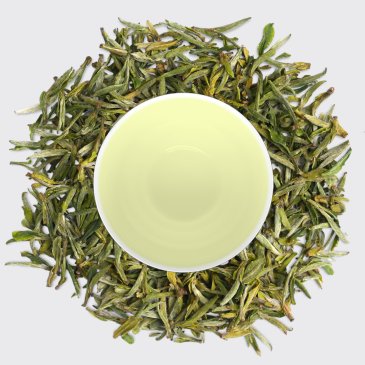
Despite being made from 'White' tea varietals, this is a Green tea as it goes through the same processing as other greens to make an unoxidised tea. Please note that the Anji Bai Cha that we love the most has a golden hue so do not expect to see bright green leaves (this is usually a sign of lower quality tea).
Anji Bai Cha is very rich in Theanine giving the tea a characteristic vegetal taste and calming sensation.