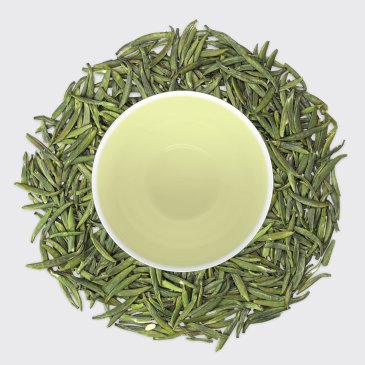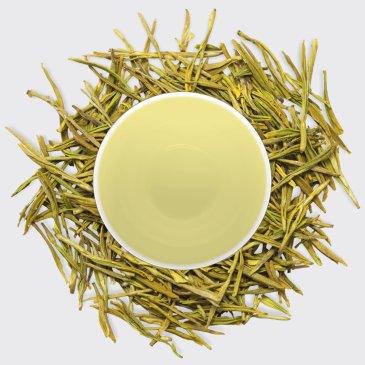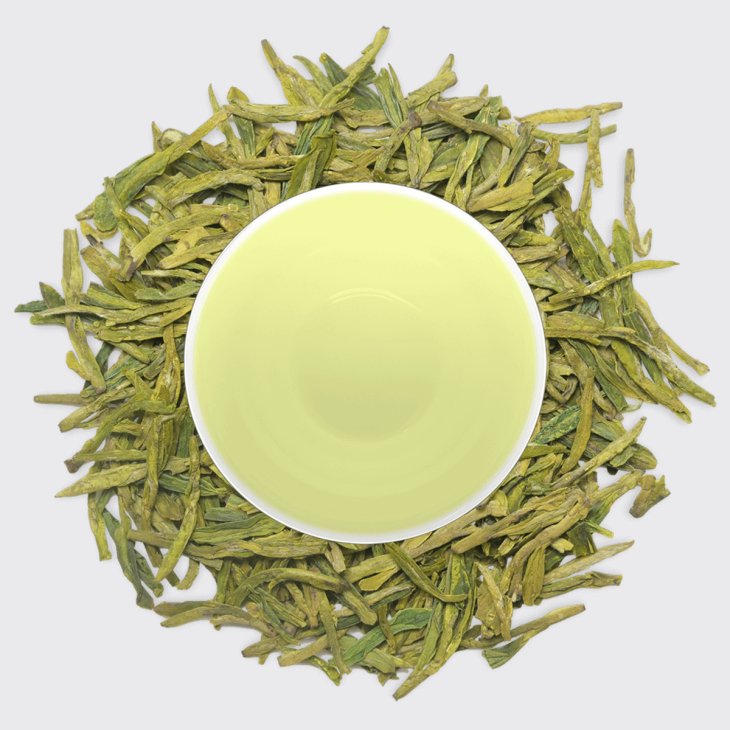



Authentic, Ming Qian Xihu (West Lake) Long Jing, produced in Shifeng (Lion's Peak). Clarity and depth combine to create a bright yet warm rendition of this famed tea. Nutty and toasty with sweet syrup and crystalline minerality.
Every year, when selecting our Imperial Green Long Jing, I will taste many samples of Dragonwell produced in the famed fields and villages around West Lake (Xihu).
These areas are historic production sites for Long Jing and command very high prices, which are most often not justified by the experience.
But when I find a batch that expresses something special about that terroir, then I will buy in a small batch to offer as Long Jing Supreme.
This tea was picked at Lion's Peak (Shifeng). Anyone who even remotely explores Long Jing will know that Lion's Peak is widely considered to be the most sought-after of the Xihu locations and the cost reflects the uniqueness of the terroir, the skill of the production and the demand for this tea.
I don't usually buy from Lion's Peak as the market is flooded with imitations and the real stuff is often underwhelming,
But, when I tasted this batch without knowing anything about its provenance (we taste blind to avoid being influenced), I had a moment of Long Jing perfection.
It is hard to describe what makes a certain batch of tea stand out because it is not simply about flavour.
Yes, this tea has the requisite balance of toasted bean and roasted chestnuts, lemon-syrup sweetness and green melon refreshment. It has a thick liquor and the longevity that we should all expect from a quality tea.
But, it has something else, something subtle, ineffable but noticeable to those who tune in.
There is an almost crystalline clarity to the tea, which begins with a mineral glow in the mouth and adds shimmer to all of the aromatics without ever being harsh.
The taste has a refined balance without any one flavour dominating, leading to a refrained elegance.
As you brew further into the tea, the later infusions brew confidently without any risk of vegetal muddiness or astringency. Each infusion shows sweetness, purity and poise.
This is the Long Jing, which quietly displays quality and heritage, commanding attention without being showy. It is a perfect example of careful handmade picking and processing by skilled producers with the intention of allowing the perfection of a terroir express itself.
Xihu vs Zhejiang Long Jing
Long Jing is one of China's most famous Green teas and must be produced in Zhejiang province. This protected designation means that any similar tea being produced outside of Zhejiang should only be called 'Long Jing Style' tea.
Long Jing is broadly divided into two categories - Zhejiang and Xihu.
Zhejiang Long Jing is any tea made in one of the province's excellent growing areas.
Xihu Long Jing is tea produced in the original core area for production called Xihu (West Lake) which is right next to Hangzhou. Xihu Long Jing can be further divided into the specific small part of Xihu where it is produced. Traditionally, these are five locations (Lion, Tiger, Plum, Cloud and Dragon), but nowadays you may hear other names of villages (such as Weng Jia Shan, Hu Pao, Yunqi, Long Wu, Shi Feng and Mei Jia Wu).
All of Xihu Long Jing is highly sought after and high in price. Why is Xihu tea so much more expensive? A variety of reasons.
Firstly, the terroir is the origin of Long Jing - the soil, climate and microclimate are all perfect for this tea. Secondly, the reputation of Xihu and the history of making Long Jing in this area means that the producers tend to be very knowledgeable, highly skilled with premium quality standards demanded from their tea. Lastly, the price of Xihu Long Jing is inflated by its name tag and limited supply.
How do you know if your Long Jing is authentic Xihu material? I see a LOT of tea being sold with the 'Shi Feng' designation (as this is the most famous area of Xihu). It is simply impossible for Shi Feng to produce the amount of tea that would supply all of these shops - I have spent a lot of time in Shi Feng and it really is small! Also, the price tag of some of these 'Shi Feng Long Jing' teas are impossibly low. In fact, if you see any Shi Feng being sold for less than $1.2/gram ($45/oz) then I would be highly suspicious. Fakery has become such a problem that the local governments now supply barcodes for Xihu villages to place on their retail products to confirm authenticity.
But is Xihu Long Jing worth the price? This of course depends on the client - their wealth, their taste for Long Jing and the value that they place on the Xihu branding.
Overall, I think that the majority of Xihu Long Jing does not justify the hefty price tag but when you find a batch that is elevated to such a level of luxury drinking, sometimes you just have to dig deeper into the pockets and splurge.
These pinnacle batches are all we search for when finding our Long Jing Supreme - if we don't find any then we will not stock any Xihu Long Jing so you can be assured that you are not just paying for the name but actually indulging in the truly remarkable Long jing experience.