


Pure Hei Cha bliss. A wild and heirloom Fu Zhuan with a warm and silky character rich in candied nuts and maple syrup offset by a mandarin brightness and perky body energy,
"When are you going to get some Fu Bricks?!" has been the question I have been asked too many times over the decades.
My answer? Fu Bricks tend to be tasty but unremarkable and overly dominated by one specific flavour (more on that later).
For those who need a catch-up, Fu Zhuan is a ripened tea (Hei Cha). It falls under the same category as Ripe PuErh from Yunnan, Liu Bao from Guangxi, and many other variations. The key process for Hei Cha is that the leaves undergo a process to accelerate microbial fermentation.
Fu Zhuan is a Ming Dynasty historic tea from Shaanxi province but since the 1950's the production of this tea type has been embraced by Hunan.
The methods to make Fu Zhuan vary considerably between producers and many of the processing details are kept quite secretive.
In general the picked leaves are fired in woks and then undergo immediate Wo Dui (pile fermentation) before being sun dried. These semi-fermented leaves are then pressed into bricks and stored in a fermentation room to further develop flavour and grow the famed Jin Hua or Golden Flower mold (eruotium cristatum).
This Jin Hua mold has a very particular taste - honeyed and yeasty. It is quite delicious and is a hallmark of Fuzhuan.
HOWEVER, I find that this taste overly dominates many Fu Bricks as producers promote the idea that the amount of Golden Flowers is a direct representation of quality. There is this marketing spin that more Golden Flower Mold = better tea.
So producers can get quite fanatical about boosting their Jin Hua content sometimes by inoculating the tea with spores blended with wheat flour (making the tea unsuitable for those with wheat allergies).
I disagree with this direct association between the amount of Golden Flower mold and quality.
The Golden Flower mold adds a necessary flavour profile to Fu Zhuan but the tea has to shine out as the star of the show.
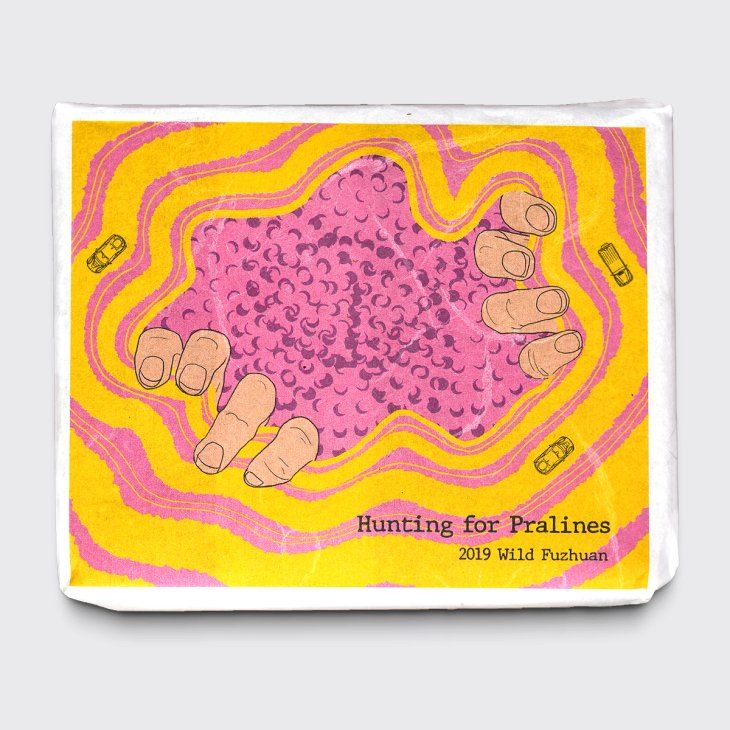
Here are some close ups of Hunting For Pralines - the mold is there but not excessively.
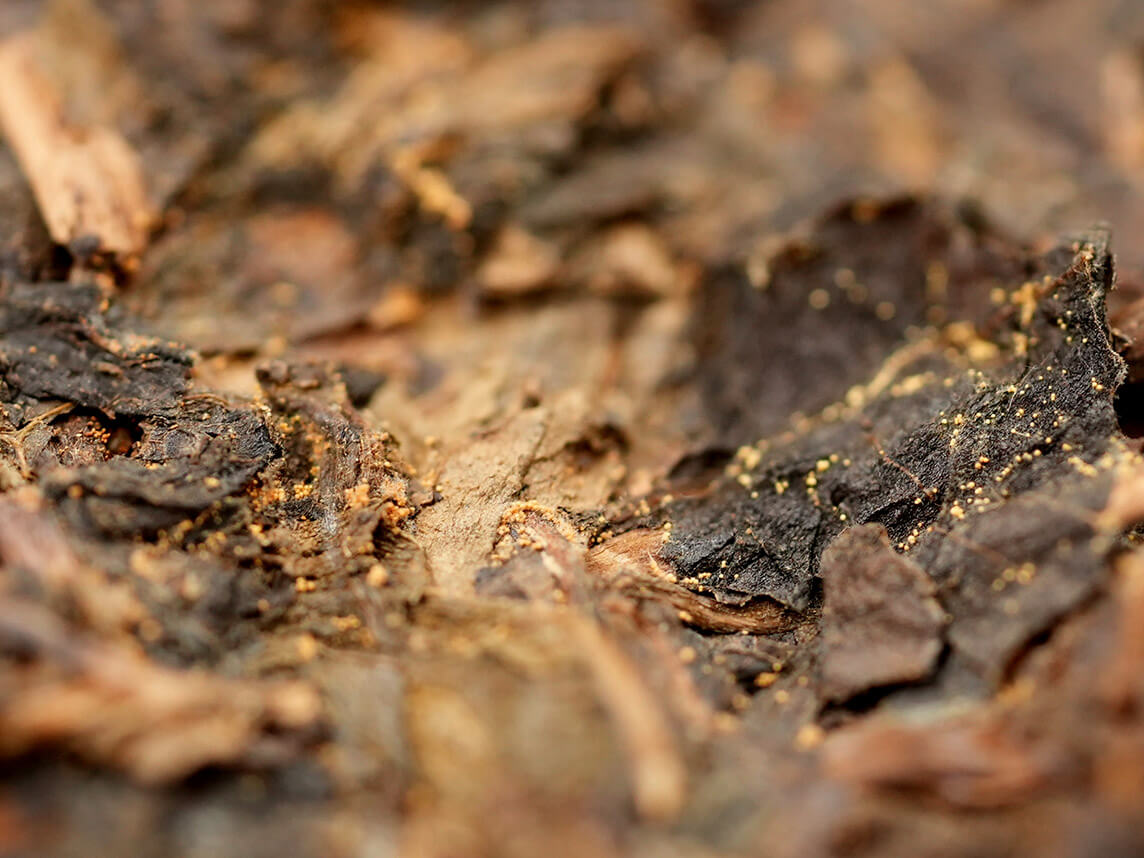
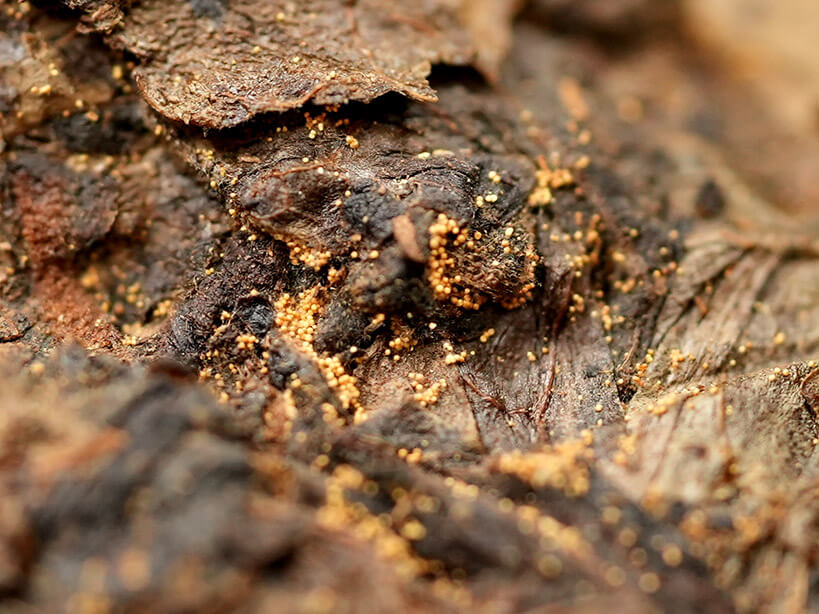
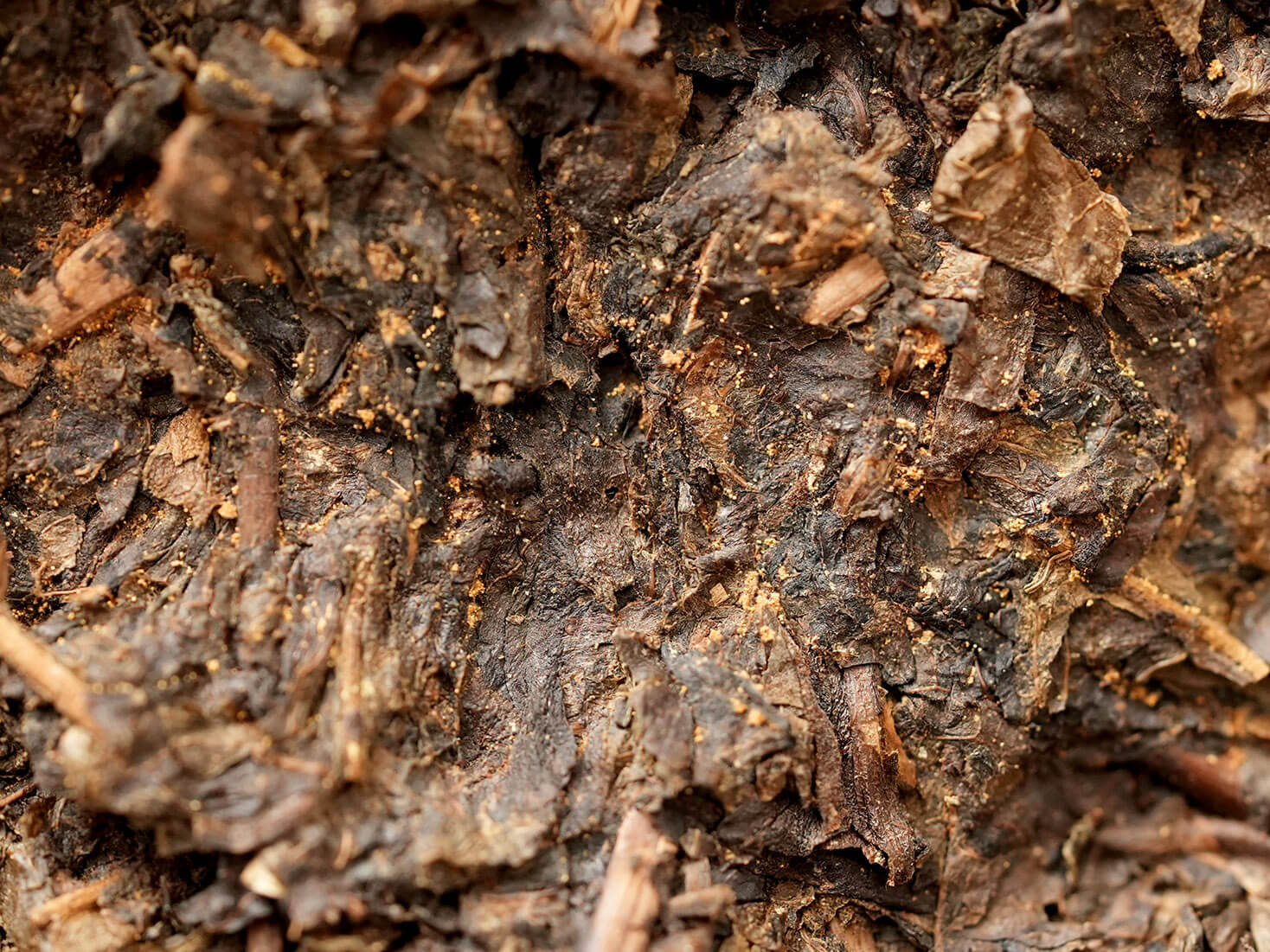
There are plenty of quite low-quality tea bricks out there with a smoky undertone and a flourishing display of Golden Flowers and I don't dislike the taste but I find it to be masking the true essence of the drink - tea trees!
Hunting For Pralines takes a different approach.
The leaves are picked from wild, heirloom trees planted in the 1950's. They are then wok-fired, rolled and immediately piled for fermentation (using the residual moisture in the leaves) for just one night!
After sun drying, the leaves are pressed into bricks and stored in a fermentation room at 95% humidity and 30 degrees Celsius (86F). They are rotated in these conditions for 6 months.
The extended fermentation as bricks will naturally develop the Jin Hua Golden Flower mold but not excessively!
The result is a Fu Zhuan which is smooth and pure (without any smokiness) with accents of that Golden Flower taste complementing rather than dominating the tea.
Hunting For Pralines has its namesake candied nuts - a whole assortment from brazil to betel to pecan and hazelnuts. All of them are drenched in a maple syrup or brown sugar deep sweetness.
The Jin Hua adds a brioche yeastiness and a vanilla honey depth but does not overpower the flavour.
There are autumnal foresty, woodsiness and aged leather aromas which add dimension to the caramelled roundness.
All of this is topped off with a distinct mandarin and goji berry brightness.
Drinking this Fu Zhuan is so delightful and easy sipping (a world away from some of the more harsh Fu bricks out there). It has a soft and comforting character with a warm digestif feeling.
A little note of caution though - this tea has a deceptively strong energy and will have you happily bouncing around with a little spacey high so you may want to avoid heavy sessions before sleeping.
Fu Bricks are remarkably affordable (especially compared with PuErh) and there are plenty of cheaper bricks avaiable for purchase. Hunting For Pralines is on the higher end of the price range (although still much cheaper per gram than PuErh). It represents a purist approach to expressing those old tea trees and is my favourite Fu Zhuan by far.